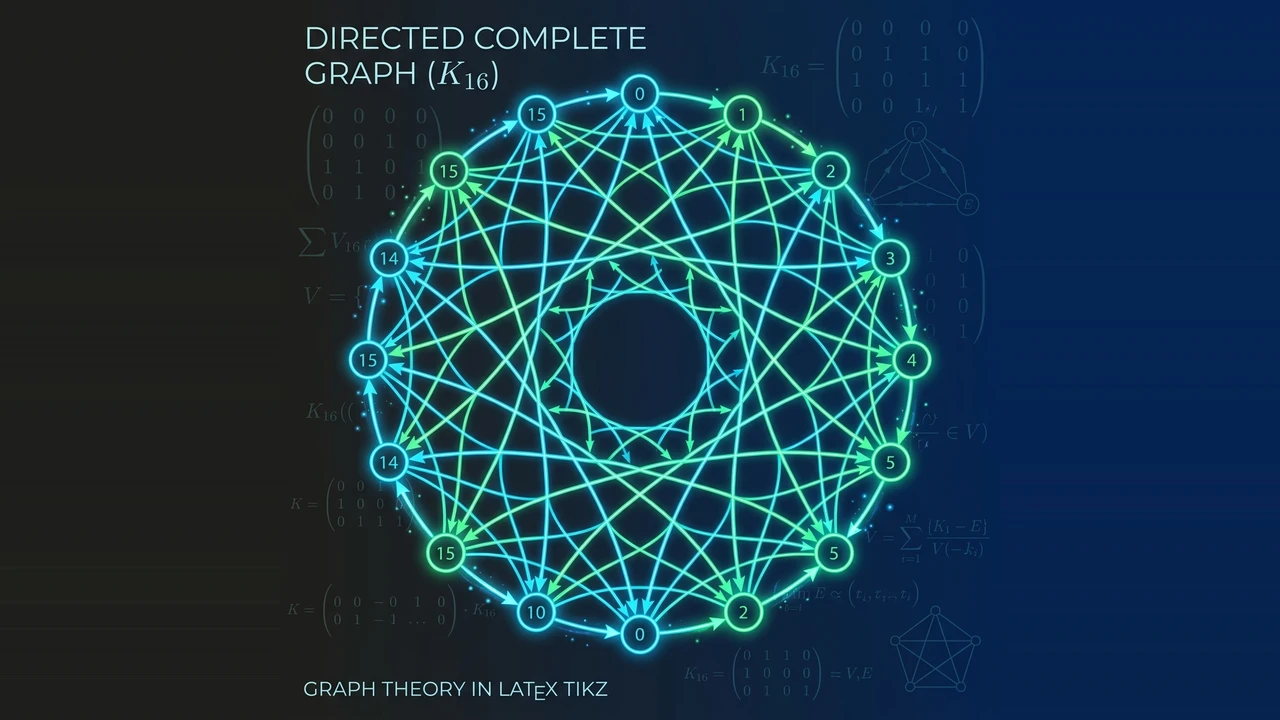
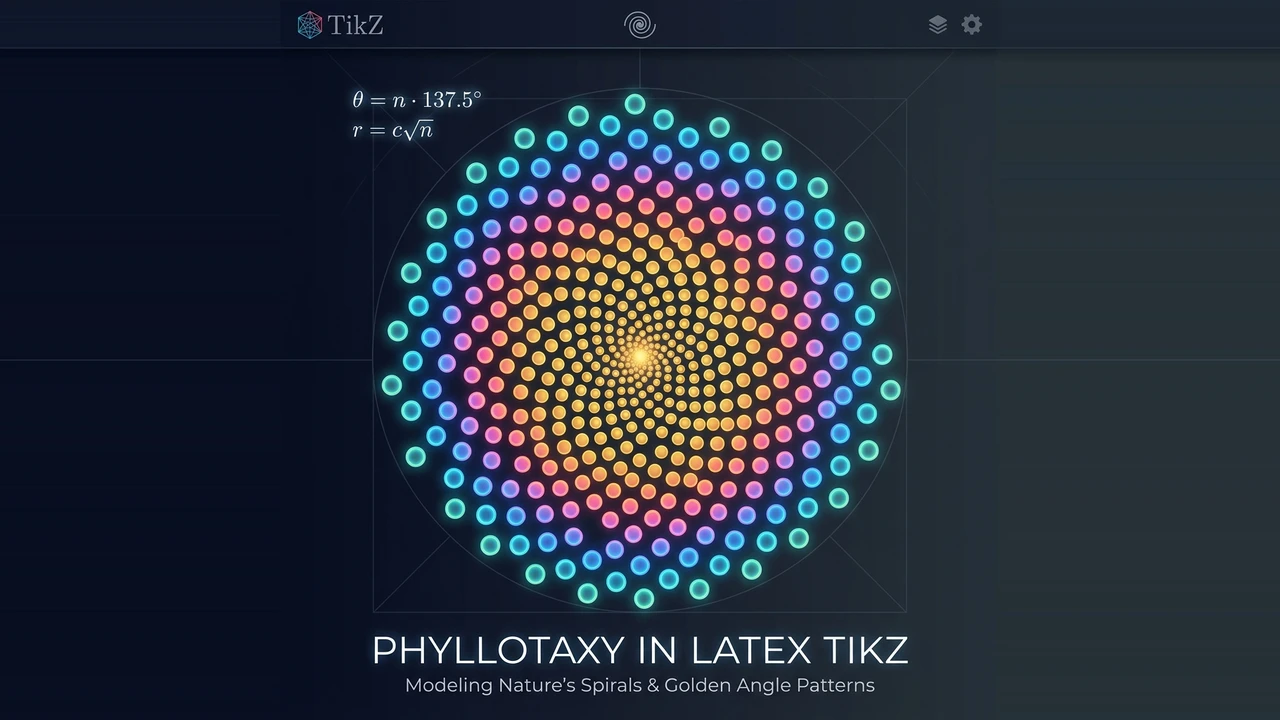
A complete guide to drawing mandalas using LaTeX TikZ — including full .tex source code and detailed line-by-line explanations.
Introduction
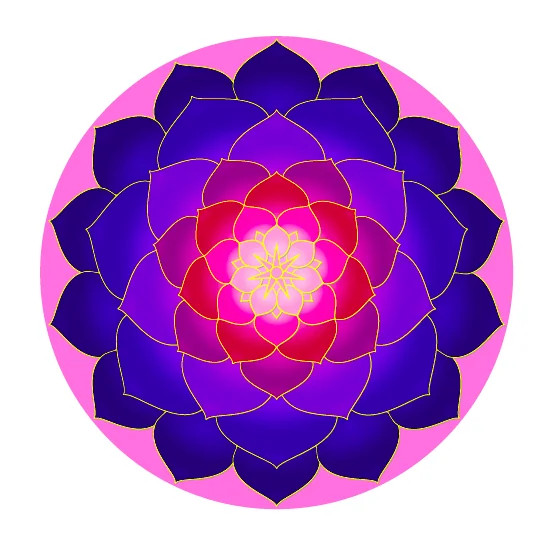
A mandala is a geometric pattern that symbolizes order, balance, and harmony. Typically, mandalas are used in art and meditation as symbols of unity between the microcosm and macrocosm.
In the context of computing, we can draw mandalas automatically with high precision using LaTeX with the TikZ package, a very powerful vector graphics library.
This article provides a complete explanation of how the following LaTeX code produces beautiful, multi-layered colored mandalas using geometry, transformations, and shadow effects features from TikZ.
geometry is used to set margins and paper size (8.4×8.4 cm).
tikz is the main package for drawing.
shadows and fadings add shadow effects and soft gradations to visual elements.
Additionally, a fading definition is created so that object edges can fade gradually:
The core part uses \foreach loops to draw layers of petals repeatedly with rotation and position shifts (rotate, shift, xscale, yscale).
Shadow effects are created with:
Soft visual textures due to shadows and fading, and
Geometric harmony through regular 360° rotation.
All these patterns are generated entirely through code, without the aid of external graphic design software.
Conclusion
Drawing mandalas with LaTeX and TikZ demonstrates that this scientific typesetting system is not limited to text and formulas, but is also capable of creating complex visual artwork.
By utilizing:
Bézier curves for organic shapes,
Transformations (rotation, scale, translation) to create symmetry, and
Shadow and fading effects for visual depth,
users can create beautiful, precise, and aesthetic mandala patterns, entirely code-based.
This approach combines mathematical logic and artistic beauty — making LaTeX not just a scientific writing tool, but also a digital canvas for geometric art.
References
Tantau, T. (2024). TikZ & PGF Manual, Version 3.1.10 — The Definitive Guide to Graphics in LaTeX.
Botoeva, E. (2018). The Beauty of Symmetry: Drawing Mandalas with TikZ.