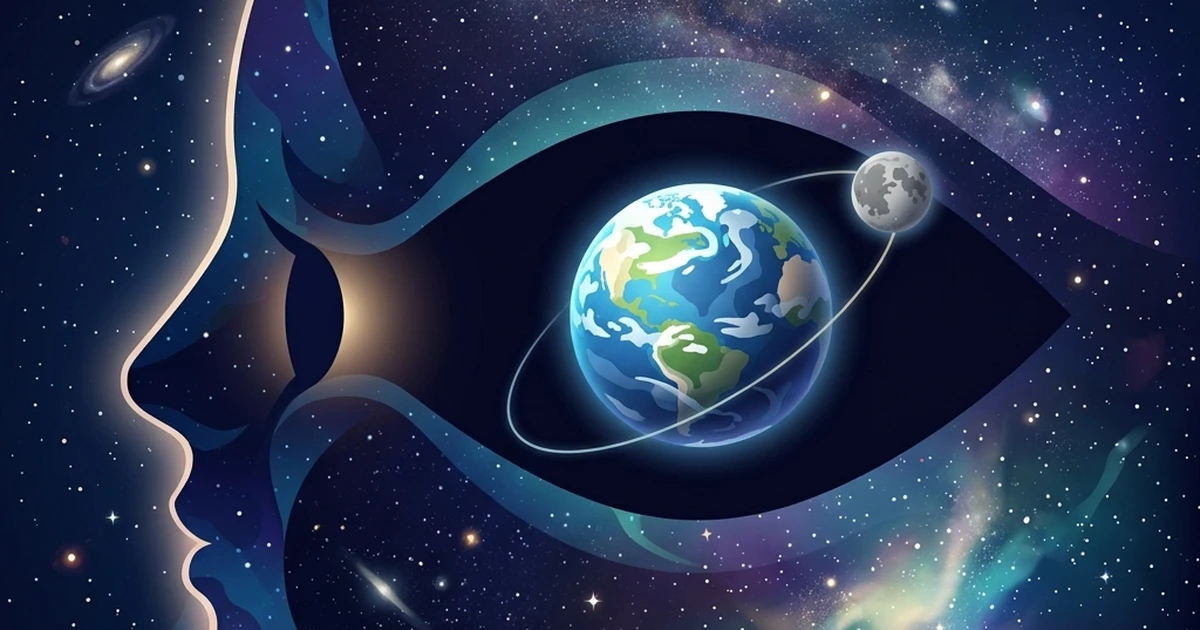
Earth Moon And Our Eyes
Astronomical and Anatomical Calculations
Calculating the Earth’s Mass
Earth Earth is where we stand and is home to living creatures. Of course, living creatures that we know such as humans, animals, plants, fungi, microorganisms and so on. It is from this earth that humans try to study the celestial objects they see. So finally we know that Earth is one of the planets that surrounds the solar system.
Earth is the third planet from the sun, as well as the densest and fifth largest planet of the eight planets that revolve around the sun in the solar system.

The Earth is considered to be a solid sphere with a mean radius of m. The mass of the earth is expressed by where represents the radius of the earth, is the gravitational acceleration at the earth’s surface, and is the general constant of gravity. The mass of the earth if and is:So, the mass of the earth is about kg.## Calculating the Moon’s Orbital Speed
Month The moon is the earth’s satellite. The moon always rotates around the earth and around the sun. 
The orbital speed of the moon is expressed by , where represents the average radius and represents the time (in seconds) required in one round. The orbital speed of the moon around the Earth with an average radius of m and taking seconds to complete one revolution is:So, the orbital speed of the moon around the Earth is m/s.## Calculating the Pupil’s Area
Eye Pupils The pupil is in the center of the iris (the part that gives color to the eyes). The function of the pupil is to allow light to enter the eye so that it can be focused on the retina to begin the vision process. In general, the pupils will look perfectly round, the same size and black. The black color occurs because light passing through the pupil is absorbed by the retina and is not reflected back.

When the light is dim, the pupil radius becomes m. Using the circle area formula , the area of the pupil in dim light with a value of is: So, the area of the pupil in dim light is m. So, I hope this article is useful. If you have criticism, suggestions or improvements, please leave them in the comments. Thank you.😊🙏